We are pleased to announce that this year we have awarded the Cherry Gertzel Bursary Award to four worthy recipients. Congratulations to Rita Adjei, Victoria Butete, Huzeima Mahamadu and Brendah Nyagah.
Rita Adjei, University of Melbourne

Rita Adjei is a PhD candidate at the University of Melbourne, Faculty of Education. Her PhD research focuses on sustainability in higher education and its relations to policy and Indigenous Knowledge in Ghana. She also has an MPhil in Environmental Planning and Development (with Distinction) from the University of Energy and Natural Resources, and a BSc. Development Planning from the Kwame Nkrumah University of Science and Technology.
At the University of Melbourne, Rita has worked in several capacities, including as a research assistant for multiple projects, a tutor, and a sustainability strategy officer. Prior to her PhD, she worked with the University of Energy and Natural Resources for over 5 years as a senior research assistant in the Quality Assurance and Academic Planning Directorate.
Rita is also a past Wattle Fellow at the University of Melbourne, which is a competitive program for training global leaders in sustainability. In this program, she implemented an action-oriented project (Students in Sustainability Action project – SISA) that empowered over 200 Ghanaian university students to lead sustainability transformations across their campuses and communities. She is currently the founder of Campuses Sustainability Alliance (CampSA), a not-for-profit organisation focused on empowering higher education institutions in Ghana to lead sustainability transformations in alignment with her PhD research and action project.
Rita’s PhD research explores how public universities in Ghana, a Sub-Saharan African country, are incorporating sustainability into their institutional activities, including education, research, campus operations and facilities, governance, and community engagement. In this research, she uses a multi-site case study approach to assess the universities’ orientations to sustainability and the existing sustainability policies across the domains of institutional activity. The study involves a combination of policy content analysis and interviews with key university officials to provide an in-depth understanding of the existing situation of sustainability in higher education (SHE) policies, including the policy development processes, the actors, and the drivers and barriers of SHE policies in Ghana. Her research also examines how sustainability policies in Ghana are shaped by Indigenous knowledge and global programs and frameworks, such as the Sustainable Development Goals. Being the first SHE policy research for Ghanaian universities, Rita hopes to provide an understanding of the unique Ghanaian context to inform global, national and local sustainability policy decisions and actions.
Victoria Butete, Australian National University

Victoria Butete, a doctoral candidate at the Australian National University, is deeply committed to her research on Do-It-Yourself (DIY) Culture and Music Entrepreneurship among self-employed musicians in Zimbabwe and South Africa. Her study explores their experiences and how they navigate challenges, including the impact of context on their DIY and entrepreneurial activities. Her goal is to provide policymakers and industry stakeholders with practical insights through cultural policy briefs and innovative business models. By concentrating on Southern African contexts, Victoria challenges traditional Global North frameworks and advocates for solutions rooted in local realities, fostering collaboration with participants and valuing their perspectives.
Victoria’s academic journey began with a Diploma in Secondary School Education, followed by an undergraduate degree in Music and Musicology, and a postgraduate degree in Media and Communication Studies. She completed an MPhil thesis on South African musicians, highlighting the challenges they face in earning a living through music. Returning to Zimbabwe, she continued to examine the strategies and industry structures of local musicians, including how they produced, recorded, and marketed their own music during the COVID-19 pandemic. These experiences demonstrate the potential of DIY practices to transform the region’s music industry.
Victoria, a skilled educator and researcher, has nearly ten years of experience teaching English in secondary schools and eleven years of experience teaching music business at the university level. She has supervised and coordinated research, seminars, and academic projects, evaluated and contributed to curriculum development, and presented at conferences. Her strong record of peer-reviewed publications, combined with her keynote lecture at the 2024 DIY Cultures Conference in Portugal, demonstrates her influence and international recognition. Her practical experience from heritage and master’s degree fieldwork, where she trained in oral history, conducted ethnographic research, and collaborated closely with community stakeholders, has honed her skills in communication, project management, and critical analysis, reinforcing her commitment to developing grassroots creative industries.
Victoria’s vision is to bridge arts research with practical solutions that foster community development, resilience, and sustainable change. She is committed to leveraging her expertise and coaching certification to create holistic programs that transform lives. Victoria aims to address social issues such as youth crime and substance abuse through arts education, DIY and entrepreneurial skills training, life and leadership coaching, while also empowering musicians to create employment opportunities for themselves.
Huzeima Mahamadu, Australian National University
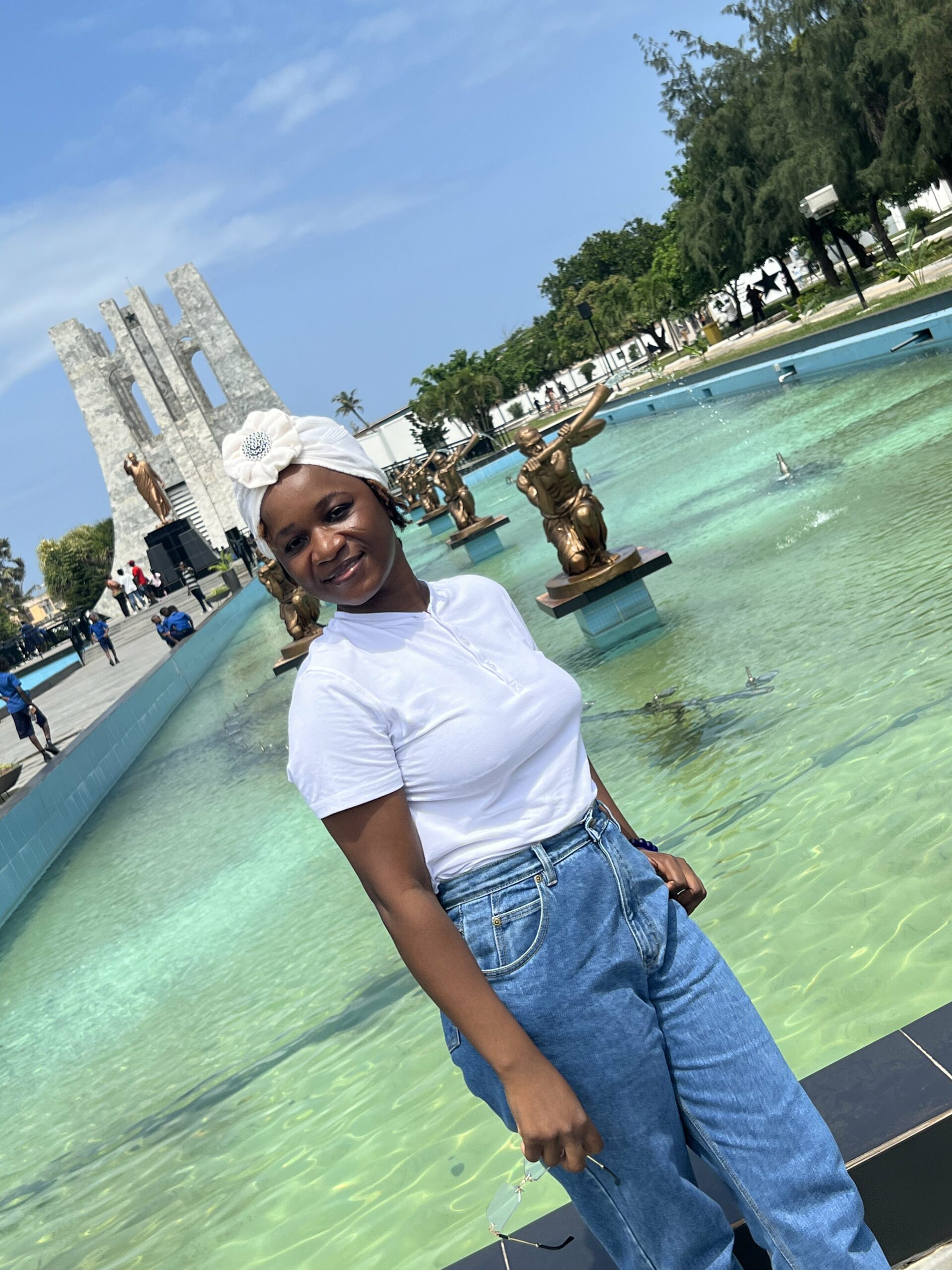
Huzeima Mahamadu is a PhD in Arts and Social Sciences candidate from the Centre for Heritage and Museum Studies, Research School of Arts and Humanities, Australian National University. She had her master’s and undergraduate degrees in Ghana. She pursued an MSc in Local Economic Development (2020) and a BSc in Human Settlement Planning (2014), both at the Kwame Nkrumah University of Science and Technology, Kumasi, Ghana. Huzeima is a development professional, facilitator, creative writer, and researcher from Ghana, West Africa, with a decade of experience working with universities and local and international Non-Governmental Organisations (NGOs) in development, education, and research. She contributed to the development of the new Early Childhood Education Policy and was instrumental in incorporating the Lively Minds Programme in the policy, and also contributed to the Early Childhood Care and Development policy review in Ghana as a policy associate and national government stakeholder manager with Lively Minds. She has also worked with people from various countries across the globe and impacted the lives of the youth and women in Ghana and Africa as a mentor and facilitator of free capacity-building training activities online and in-person sessions, as the CEO of Mahcap Institute and a volunteer mentor with various state, local and international institutions in Ghana.
Huzeima Mahamadu’s research interests are shaped by her educational background, professional experience, interests, and passion. With an academic background in planning and local economic development, Huzeima has a strong interest in and passion for tourism and heritage, which has influenced her master’s research in tourism and economic development. Building on this foundation, her PhD research delves into slavery heritage in Ghana. She believes that Ghanaians and Africans must lead in telling their own stories and histories to the world by contextualising and communicating them from the Ghanaian and African perspectives. Therefore, her research explores how Slavery history is interpreted and communicated in museums in Ghana, exploring which voices and stories are excluded or marginalised and how to engage diverse stakeholders and perspectives to foster inclusive dialogue and social justice in museums’ communication of slavery history and its legacies in Ghana, Africa and the world at large.
Huzeima is a volunteer at heart and loves imparting knowledge!
Brendah Nyagah, Australian National University
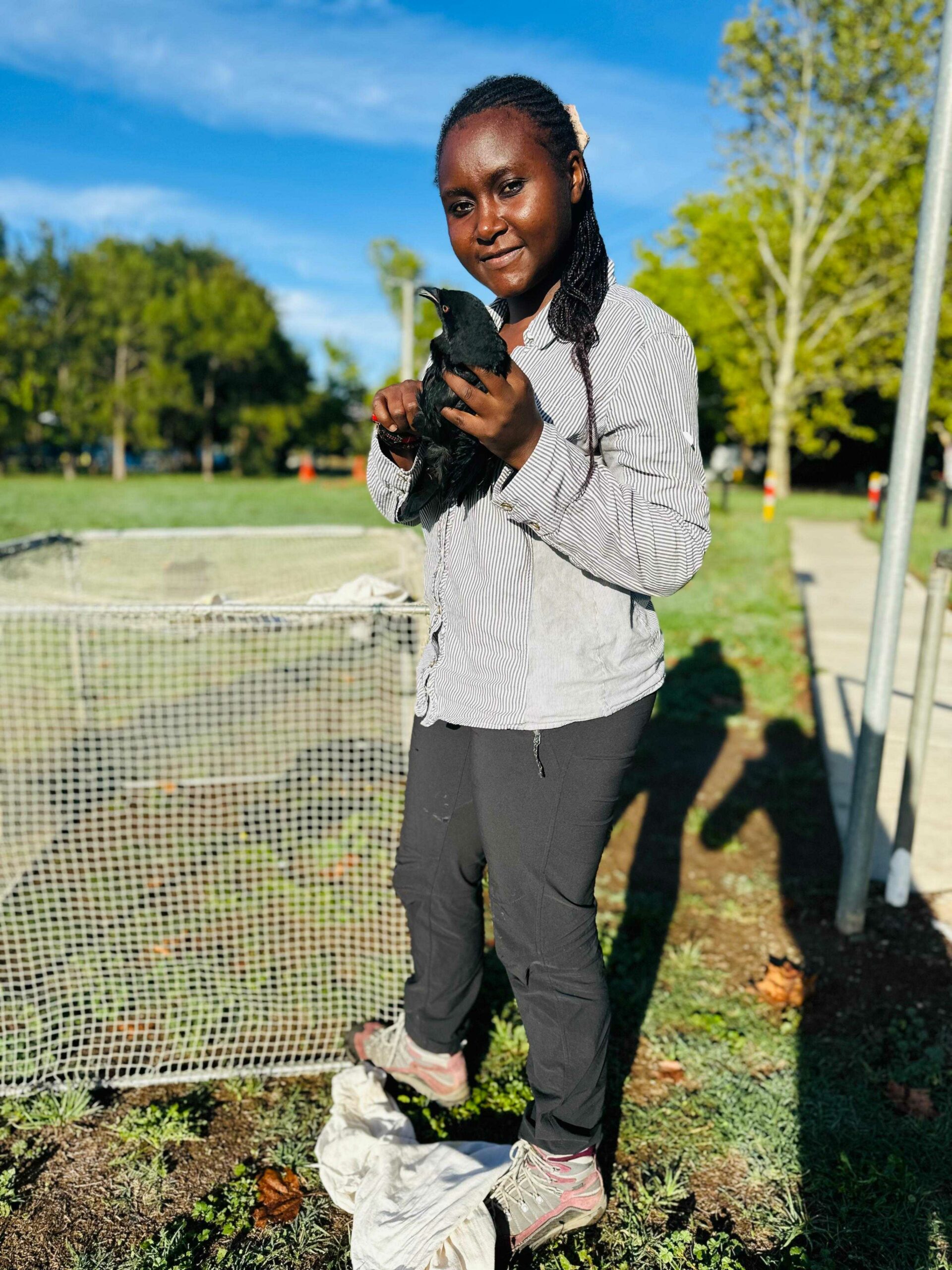
Brendah Nyaguthii is a PhD candidate at the Australian National University, researching the emergence of multilevel societies in group-living birds during harsh environmental conditions. Her academic journey started at the University of Eldoret in Kenya, where she earned both her bachelor’s and master’s degrees in wildlife management. Alongside her studies, she actively participated in leadership and extracurricular activities, serving as the leader of the birdwatching club and the coordinator for the wildlife club at the University of Eldoret. She also gained valuable field experience through biodiversity surveys in the Amboseli and Maasai Mara conservancies and demonstrated resilience during bushcraft survival training in Hell’s Gate National Park. Brendah has extensive experience working with birds in Kenya, which she gained as an intern in the ornithology department of the National Museums of Kenya and while serving as the field manager of the long-term vulturine guineafowl research project at the Mpala Research Centre. She was mainly involved in coordinating the team members, capturing and marking over 1000 birds, monitoring marked groups, and collecting fine-scale data on movement, breeding, and social interactions.
Brendah’s research focuses on understanding how group-living animals thrive in unpredictable environments when resources are scarce. She uses state-of-the-art technology—Bluetooth low energy tags—to obtain GPS positions and study the movements and social behaviours of white-winged choughs. By using Bluetooth tags, she can quantify group-to-group associations during the challenging winter season. In parallel, she uses solar-powered GPS tags on vulturine guineafowl to study how drought influences their associations in a tropical savanna ecosystem. Together, these two projects—one temperate and one tropical, but both in semi-arid ecosystems—aim to reveal how environmental challenges shape social structure across these very different species, providing insights with broad relevance for behavioural ecology and conservation in the face of climate change. Funds from this bursary will help Brendah travel to Kenya during the dry season for a period of three months to collect data. She will be tracking tagged vulturine guineafowl and monitoring their associations in the field to complement her work on white-winged choughs. Through her work, Brendah is building a strong foundation in behavioural ecology, practical field-based research, and the application of novel tracking technologies. Her comparative approach—spanning across tropical and temperate regions—aims to advance understanding of how social species behave and adapt to ecological uncertainties and environmental challenges.
